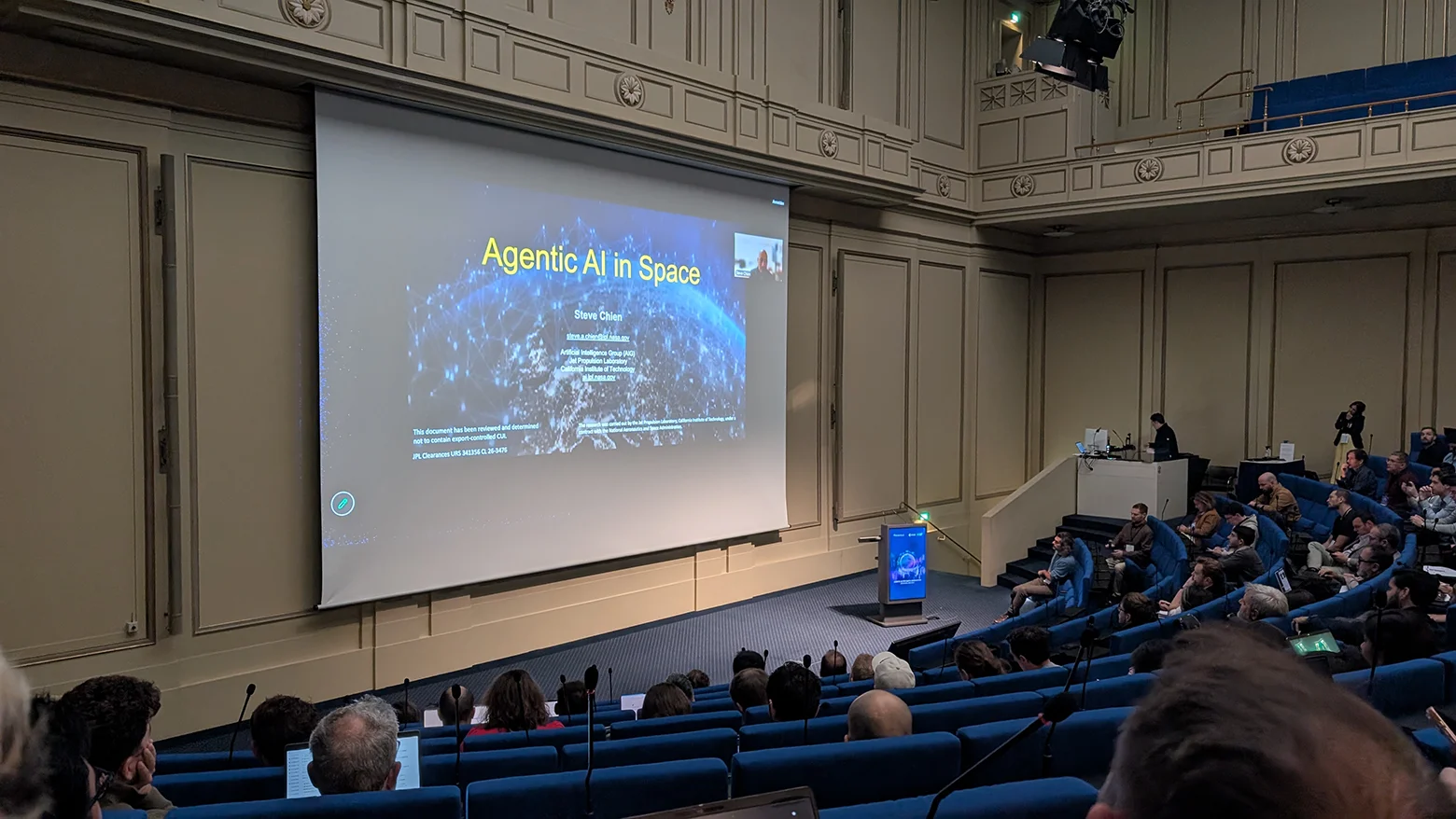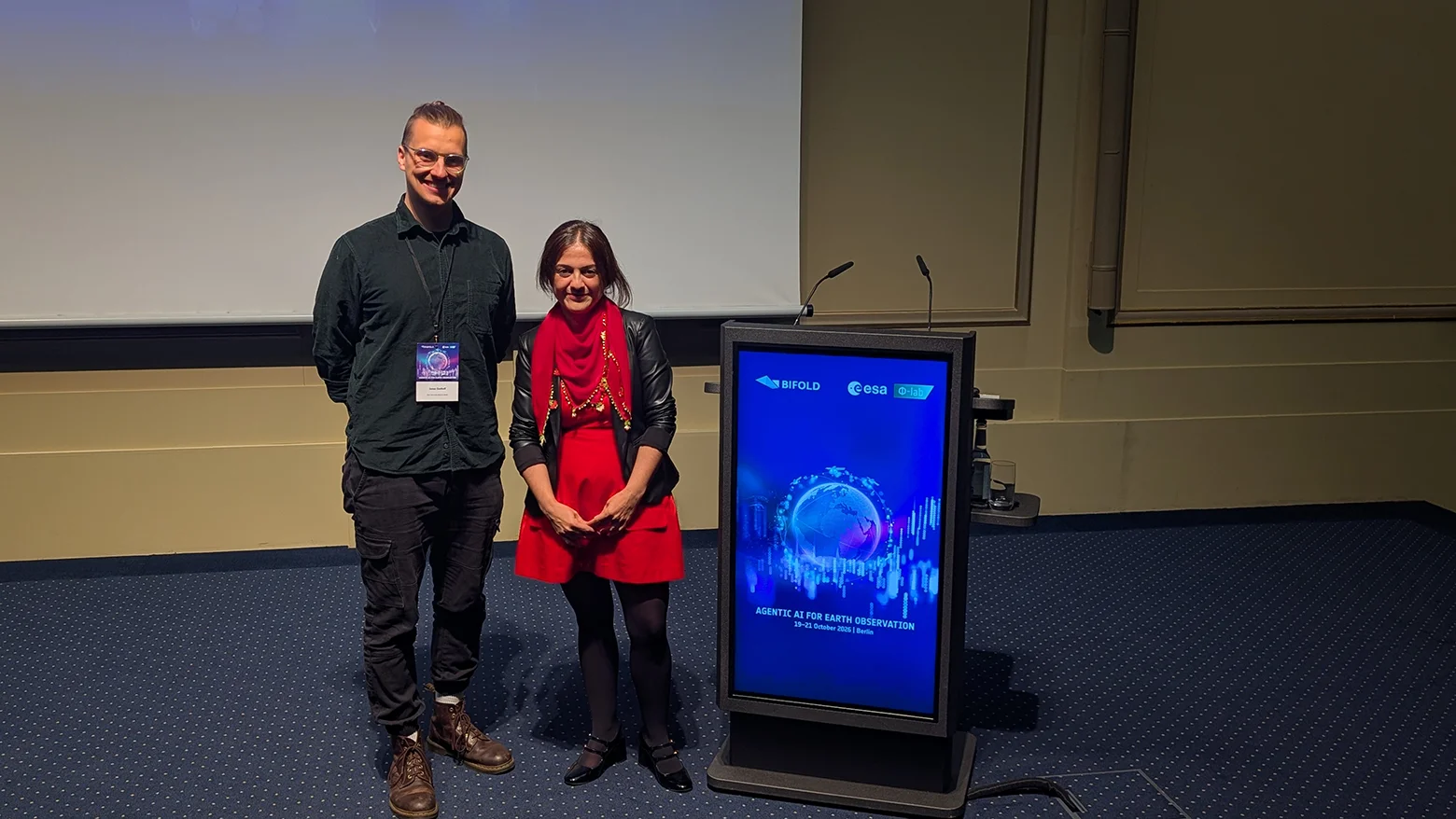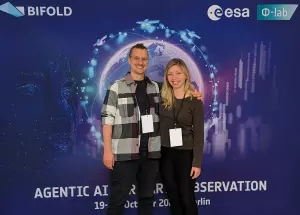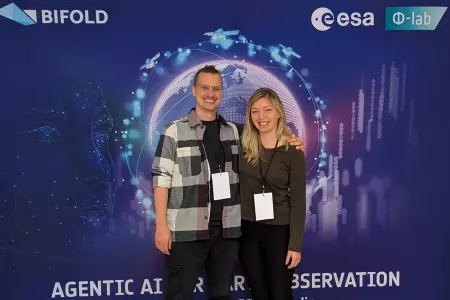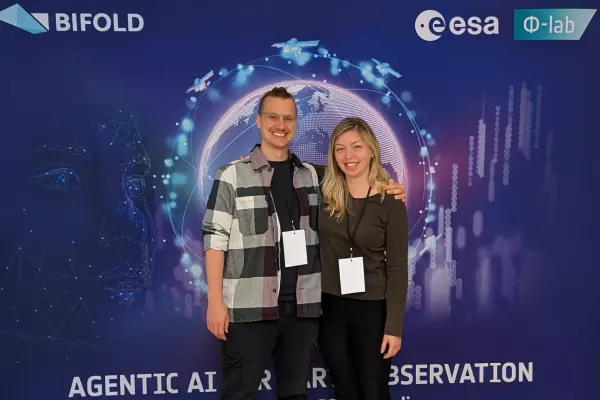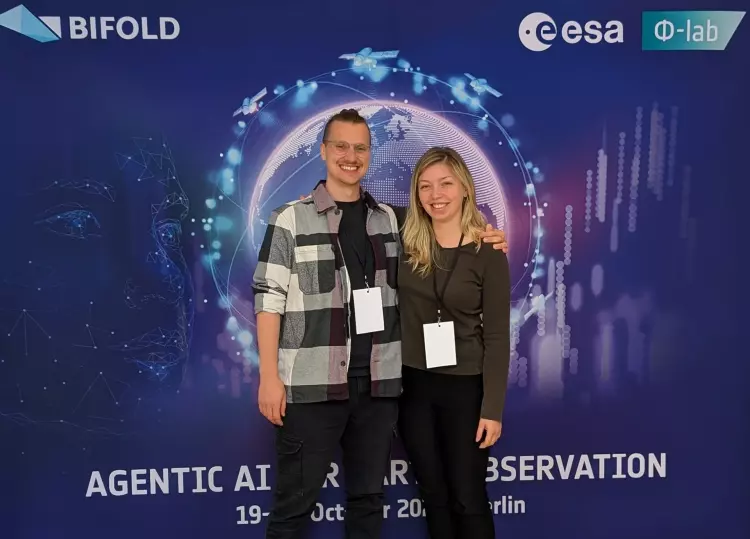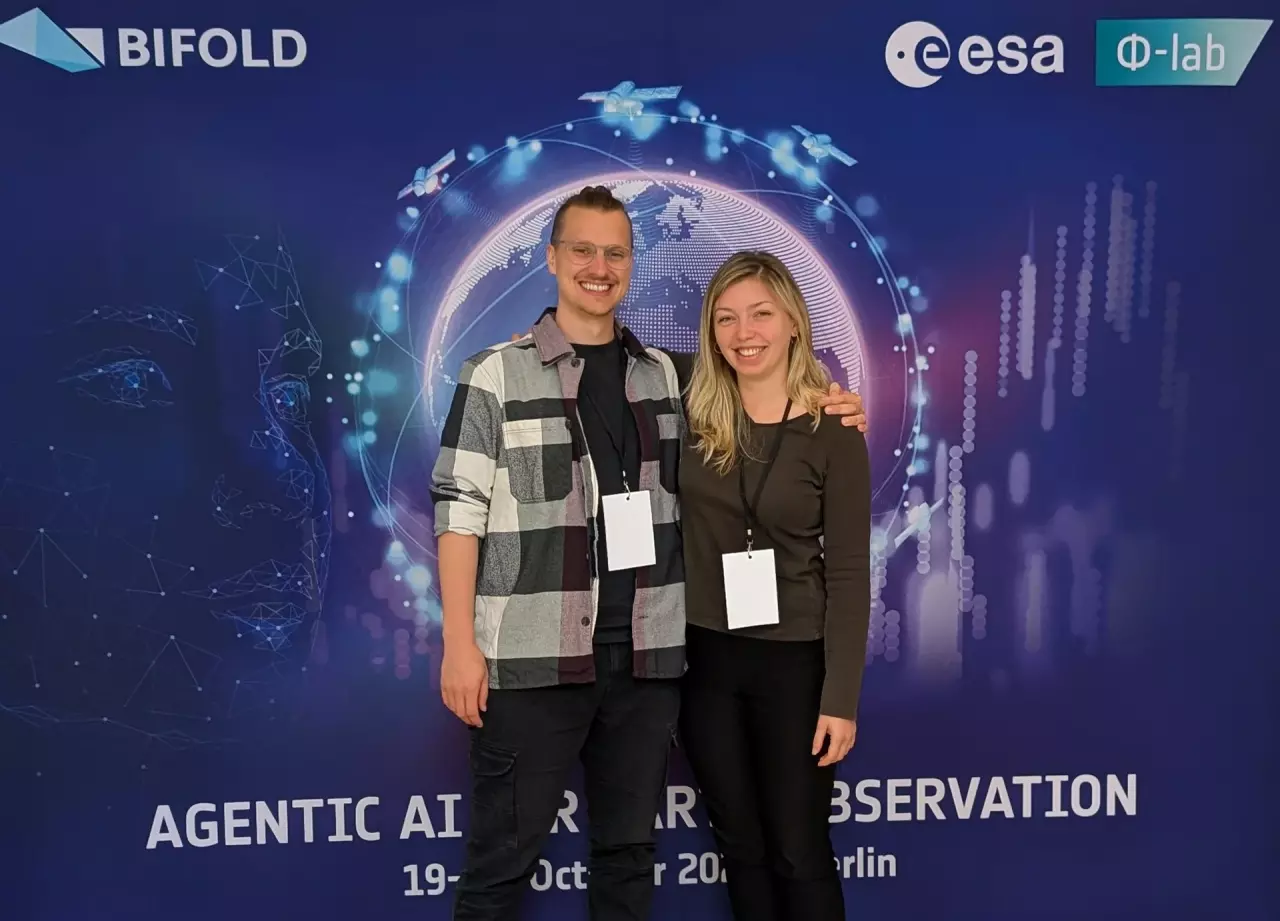
Prof. Dr. Begüm Demir of the Berlin Institute for the Foundations of Learning and Data (BIFOLD) and Dr. Nicolas Longépé of the European Space Agency’s (ESA) ϕ-lab hosted the first workshop on “Agentic AI for Earth Observation” from 19 to 21 October 2026. In addition to approximately 500 participants from around the world, our researchers Jonas Siethoff (Urban Remote Sensing) and Victoria Pissulla (Interdisciplinary Geographic Information Science) also made their way to Berlin to explore current topics in artificial intelligence for Earth observation.
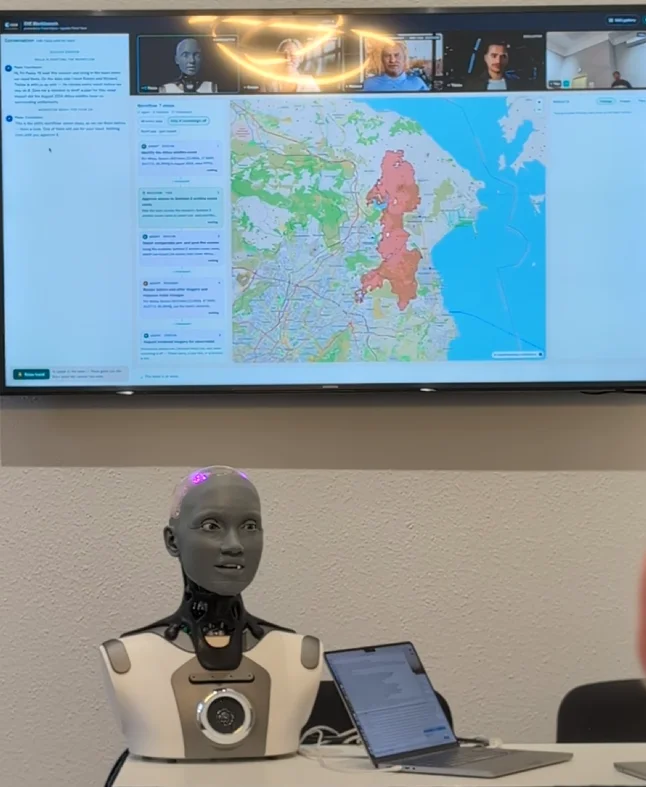
The event focused on the concept of so-called Agentic Artificial Intelligence (AI). These are autonomous systems that can independently pursue goals, make decisions, and carry out tasks in multiple steps. They are capable of cooperating with both humans and other AI units. In the context of Earth observation, this approach opens up new possibilities for analyzing and monitoring the Earth using satellite imagery, drone footage, and other remote sensing data. For example, AI agents can independently optimize data processing workflows, perform situation-specific analyses, and support short-term decision-making. As a result, when monitoring environmental changes or natural events, such as wildfires, floods, or extreme weather conditions, relevant information can be made available more quickly, and response times can be reduced.
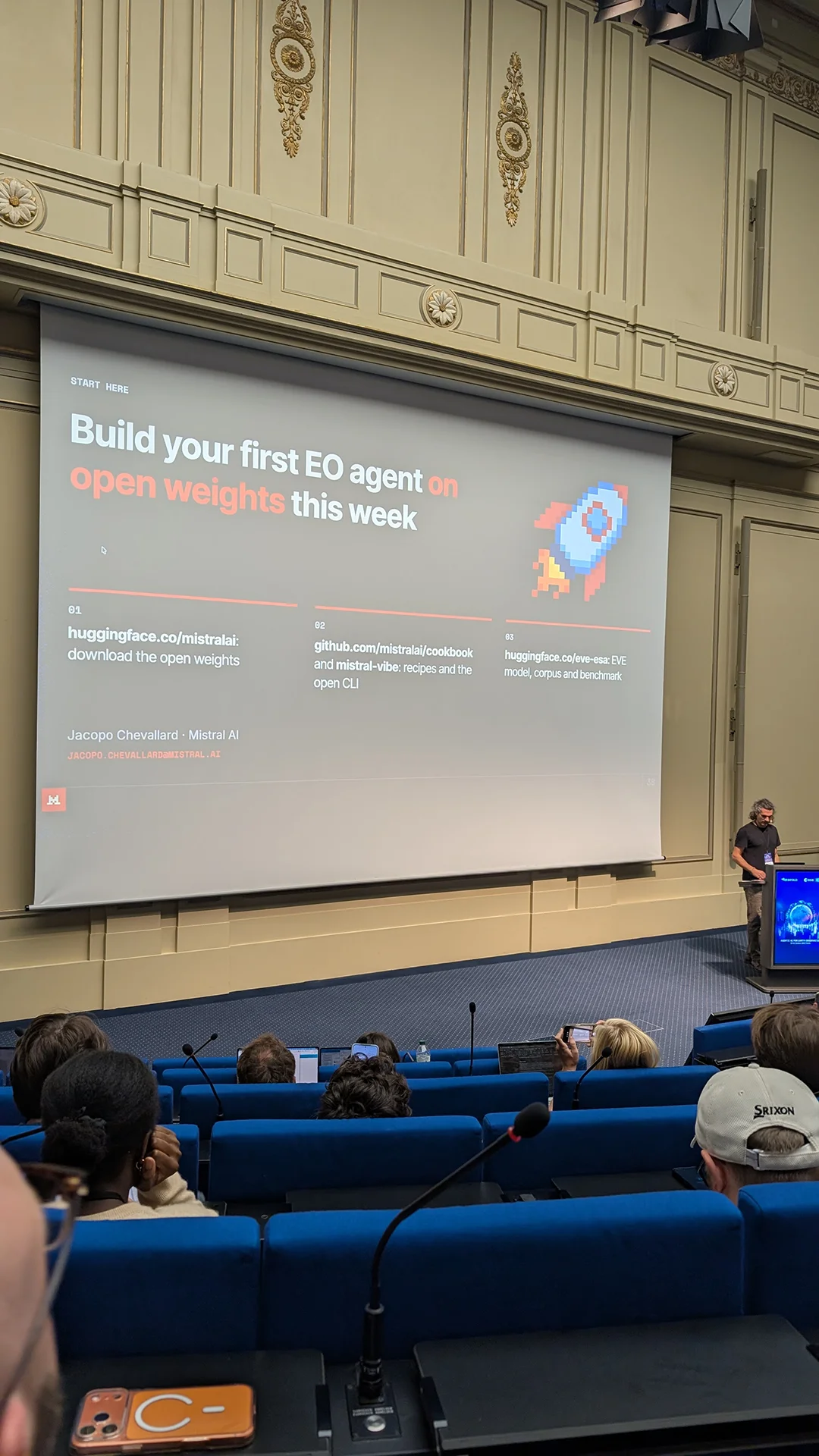
The workshop provided a platform to examine the current state of research, practical challenges, and future applications of this technology from both scientific and economic perspectives. The program included seven keynote presentations by renowned experts, including Dr. Jacopo Chevallard of Mistral AI, Dr. Steve Chien of NASA’s Jet Propulsion Laboratory (JPL), and Dr. Christopher Forest Brown of Google DeepMind. The event also featured 20 technical presentations and two panel discussions, during which open questions and potential areas of application were debated. The program was complemented by 22 demonstrations of agentic AI systems, 43 poster presentations offering insights into ongoing research projects and technological developments, and six interactive hands-on sessions to conclude the workshop.
The showcasing illustrated the potential of agentic AI through concrete applications and demonstrated how agentic systems can fundamentally transform the analysis of Earth observation data. Instead of researchers or users having to manually initiate every single step, AI agents will in the future be able to decide on their own what data is needed, which tools to use, and how to process the results.This development is increasingly moving beyond individual experiments and leading to networked, semi-autonomous systems in which multiple agents collaborate. Many prototypes are already available for practical use. The combination of Earth observation data, large language models, AI agents, and specialized tools is particularly promising, as it enables more complex inferences and longer chains of analysis. Furthermore, models and agents specifically adjusted to Earth observation tasks often perform better than general-purpose AI systems, as they take better account of the unique characteristics of geographic data and sensor technology.
However, these opportunities also come with significant challenges. For agent-based systems to be reliably deployed in Earth observation, they must be fully traceable, compatible, and controllable. This requires clear guidelines on identity, provenance, and permissions—for both data and models. Only in this way can dependencies and vulnerabilities in critical applications be reduced and a secure, interoperable agent ecosystem be established that contributes to Europe’s technological sovereignty. Another key point is the proper management of autonomy. The goal should not be to allow AI agents to act as independently as possible, but rather to grant them decision-making leeway in a targeted manner where it makes sense to do so. Agents should be able to recognize when to solve a task on their own, when to use a specific tool, when to delegate a task to another agent, and when it is better to pause and request human intervention. A higher number of agent or tool invocations does not necessarily lead to better results. Scientific quality, FAIR principles, open and reproducible workflows, and human oversight should guide the entire process. Especially when agents automatically execute many steps, the transparency of the entire workflow itself becomes a challenge.
The workshop revealed that while agent-based systems open up new possibilities for Earth observation, their responsible use requires an ongoing dialogue among the scientific community, policymakers, and practitioners. Only in this way can we harness the potential of AI while responsibly managing its limitations and risks.
Beyond the technical content, the event also provided an important setting for personal exchange. Victoria Pissulla and Jonas Siethoff took the opportunity to establish professional contacts for their research on AI-based analysis of green infrastructure and on radar-based prediction of artisanal and small-scale mining (ASM) in the Amazon region. In addition, Jonas Siethoff was able to meet his co-advisor, Prof. Dr. Begüm Demir, in person for the first time and get to know her team. We look forward to continued dialogue and future collaboration between the GI and BIFOLD. It will be exciting to see how agentic AI continues to evolve in the field of Earth observation. The workshop demonstrated that the journey from initial prototypes to practical application has already begun.

Copyright © Geographical Institute 2026
Last update: Nov 23, 2026